
A lot of businesses discovered ChatGPT and thought: this could handle our support. They're not wrong that it can handle conversations. They are wrong about how to deploy it.
The result is usually a chatbot that sounds smart but gives wrong answers — confidently incorrect about your refund policy, your product specs, your pricing. That's worse than no chatbot at all.
Here's where the thinking typically goes sideways, and what to do differently.
Mistake 1: Using Vanilla ChatGPT Without Grounding It in Your Data
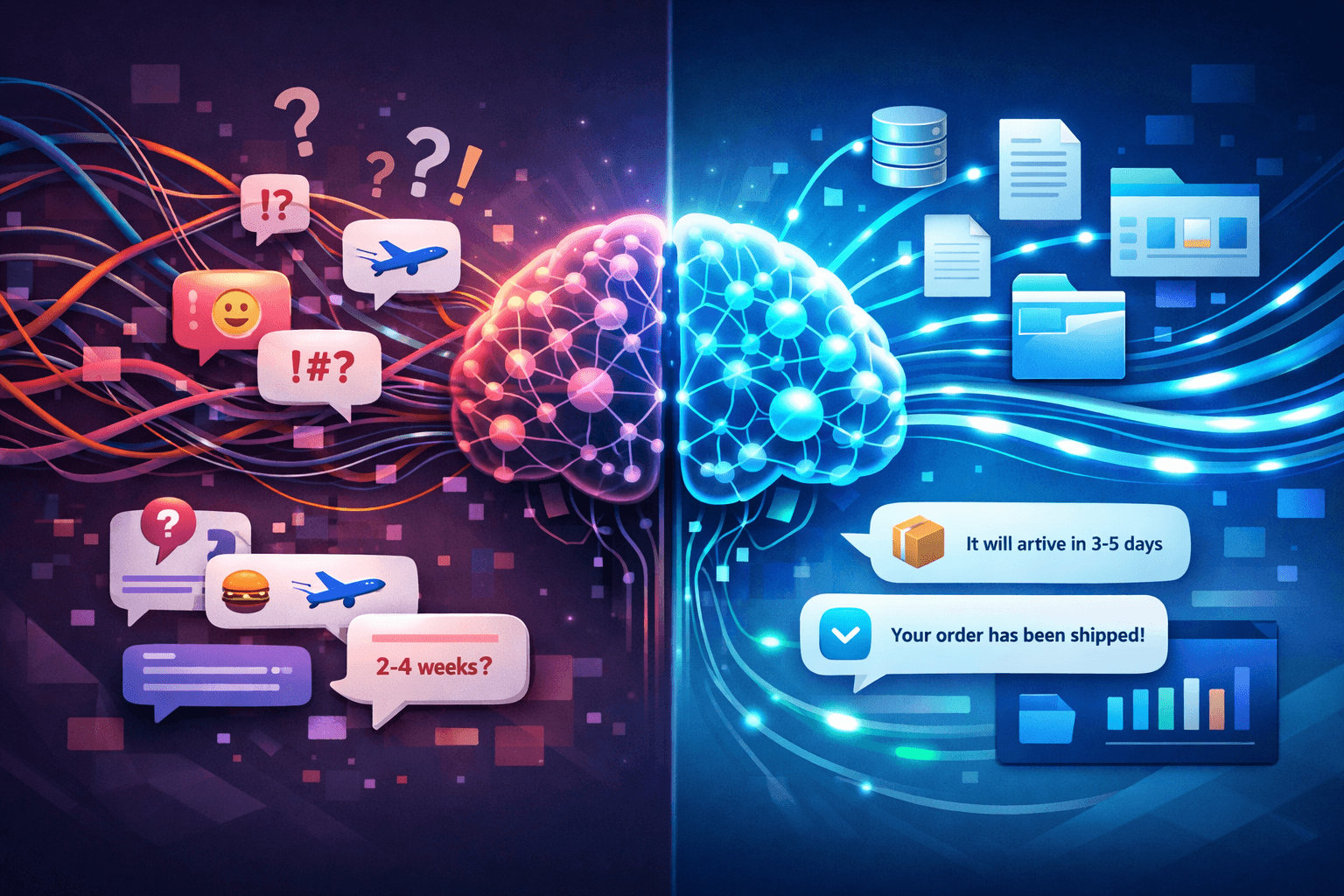
ChatGPT is trained on a massive dataset of internet text. It knows a lot of things — but it doesn't know your business. When a customer asks about your return window, ChatGPT will fabricate a plausible-sounding answer based on what return windows typically look like. That answer will often be wrong.
This is the core problem with deploying an unmodified LLM for support. The technology is real. The capability is real. But without grounding it specifically in your business's knowledge, it will invent details your customers will act on.
The fix is what's called retrieval-augmented generation — the AI looks up answers in your specific content before responding, rather than generating from scratch. Platforms like Umiplex are built around this approach. The AI only answers based on what you've given it.
Mistake 2: Skipping the Test Phase
The excitement of getting a chatbot running sometimes leads teams to push it live before proper testing. The logic is that they can fix issues as they come up. The problem is that early bad experiences are hard to recover from — customers who hit a broken bot often don't give it a second chance.
A proper test phase means having internal team members try to break it — asking ambiguous questions, using informal language, testing the edge cases. Whatever gaps appear in testing are gaps your customers would have hit too.
Mistake 3: Not Setting Scope Boundaries
An unconstrained AI chatbot will attempt to answer anything a customer asks, including things it has no business answering. This leads to bots that give medical advice, legal interpretations, or confident statements about competitor products — none of which you want associated with your brand.
Good chatbot platforms let you define the scope of what the AI will and won't respond to. It's a simple configuration, but teams often skip it. Set clear guardrails and a default escalation path for anything out of scope.
Mistake 4: Setting It and Forgetting It
A chatbot's knowledge base needs maintenance. Your pricing changes. You launch new products. Your policies get updated. If you don't refresh the training data when these things happen, your bot will give customers outdated information.
Build a simple process for this: whoever updates your website's support content should also update the chatbot knowledge base. It takes minutes when done consistently. It's a mess when done six months later all at once.
Mistake 5: No Human Handoff Plan
Every AI chatbot will encounter a conversation it can't handle well. The question is what happens next. Businesses that don't plan for this end up with frustrated customers stuck in a loop with a bot that can't help them and won't connect them to someone who can.
The handoff doesn't need to be instant live chat. A clear path to email, a contact form, or a callback request is sufficient for most businesses. What customers can't tolerate is a dead end.
What Good Looks Like
A well-deployed AI support chatbot does a handful of things right: it only answers based on your actual business content, it's honest when it doesn't know something, it routes unusual cases to humans, and it gets updated when your information changes.
None of that is technically complicated. It's mostly about using the right tools and having the right processes in place. The businesses that get the most out of AI support are the ones that treat the chatbot as part of their support system — not a replacement for thinking about support.